Where Is the Prostate Located? Understanding Prostate Anatomy, Function, and Testing
The prostate is an oft-forgotten organ that surrounds the urethra, sitting under the bladder and in front of the rectum. It plays a role in managing ejaculatory fluid and helping bladder control. There are multiple zones within the prostate, and by better understanding where each are located and what they are responsible for, you can gain an understanding of how your doctor is able to monitor your prostate health through physical exams and blood tests and how the prostate is implicated in diagnoses such as prostate cancer or Benign Prostatic Hyperplasia (BPH).
Why should you care about your prostate?
Many of us spend the majority of our lives not thinking about our prostates. But, as we get older this funny little organ seems to come up more and more often with our doctors or health providers:
“Do you have any family history of prostate issues?”
“Have you ever had any problems with your prostate?”
“When was the last time you had a prostate exam?”
This might leave us a bit curious as to where the heck is that thing, what does it do, and why is it so important?
Where is the prostate?
To geospatially understand where the prostate is, we start with the bladder which is generally found in the low abdomen/upper pelvis immediately behind the pubic bone. The prostate is a contiguous extension from the neck (bottom) of the bladder and it wraps around the urethra (pee tube).
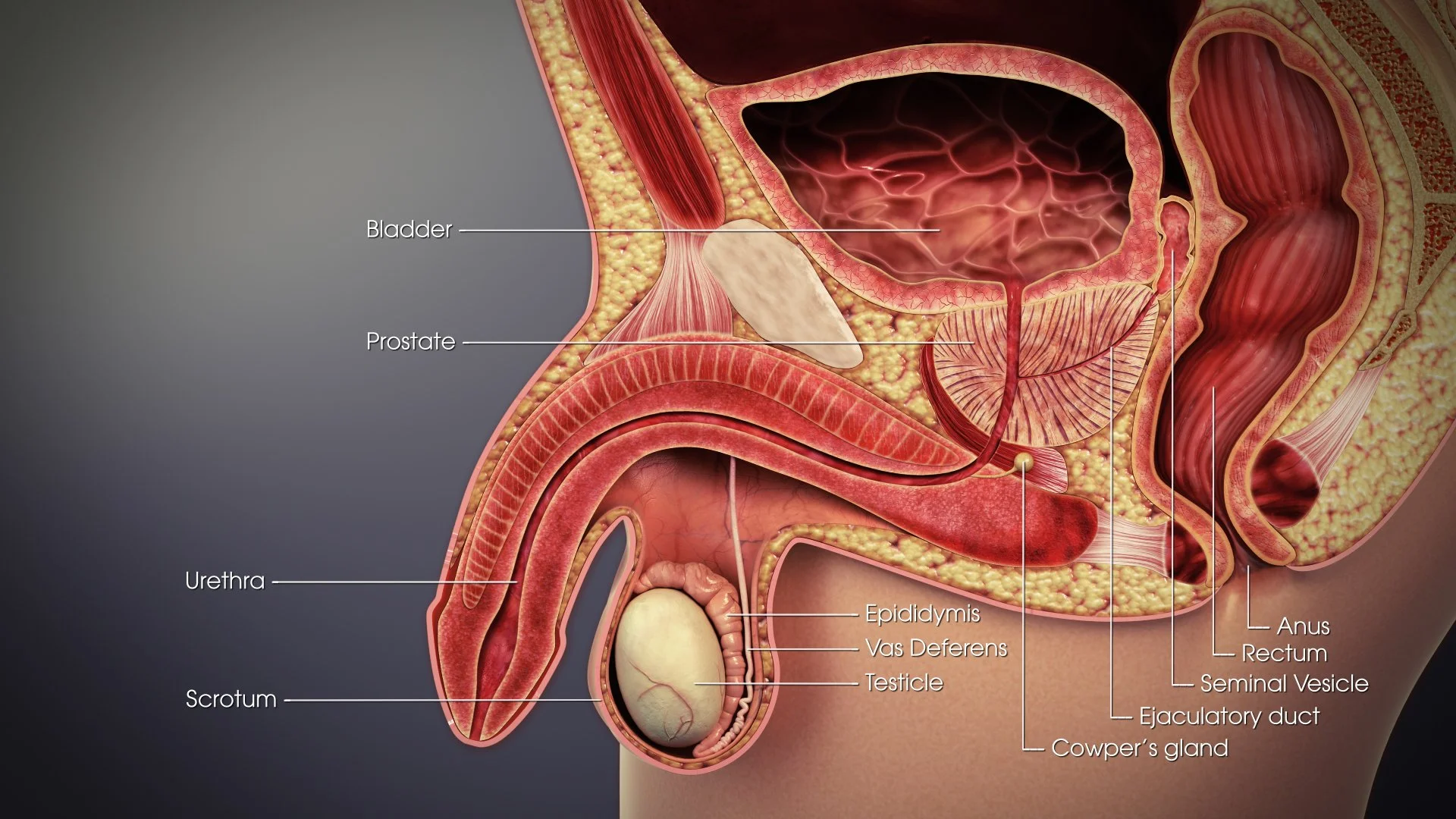
A normal, healthy prostate is approximately 1 ¼ inches tall and 1 ½ inches wide. The prostate is therefore bordered by the bladder on top, the rectum at the back, and the root of the penis and pelvic floor muscles at the bottom.
Fun Fact #1: The reason a Digital Rectal Exam (DRE) or prostate exam is possible is because of the close nature of the prostate and rectum. Since the rectum is a tube-like organ and the prostate is a dense, “filled” organ it is possible to feel for size and texture around nearly 2/3rds of most prostates via a DRE.
Another Layer Deeper: Inner Prostate Anatomy
For the engineers in the room, here are some gory details about what is going on with this thing called the prostate. If we were to cut the prostate into top and bottom halves and take a look inside we would see something that almost resembles tree rings:
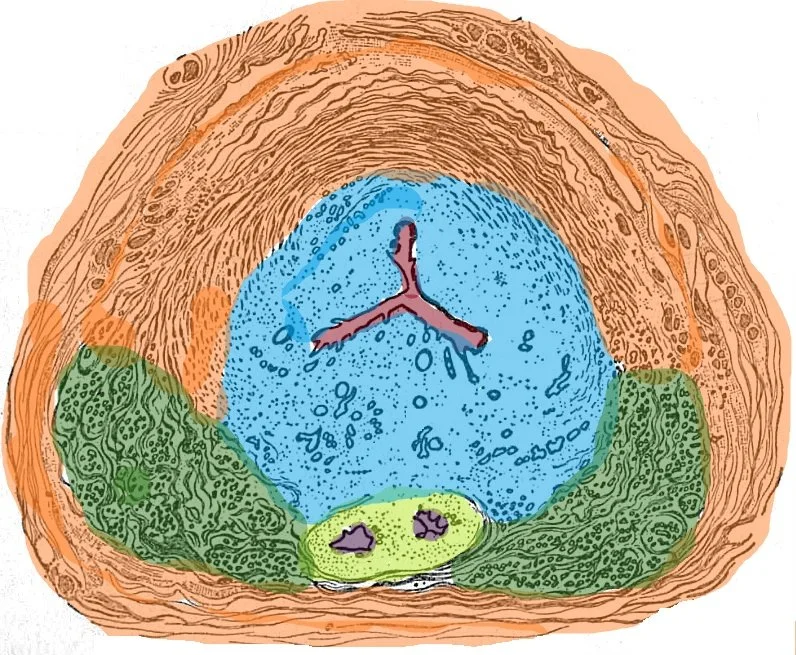
Orange “Anterior Fibromuscular Stroma”: A layer of smooth muscle and collagen that assists in keeping structure, but also contracts during ejaculation. Lower in the prostate, there is also skeletal muscle that helps stop urine flow when you tell it to (part of the external urethral sphincter).
Blue “Transitional Zone”: An inner core of the prostate that surrounds the urethra (Red).
Fun Fact #2: This is the layer that can keep growing throughout our lives and lead to peeing difficulties known as “Benign Prostatic Hyperplasia (BPH).”
Fun Fact #3: Most of the Prostate Specific Antigen (PSA) is produced in the transitional zone. PSA is an enzyme that helps with sperm mobility in the semen, but if the walls of the prostate are damaged (like from cancer), PSA can leak into the bloodstream and be picked up on my lab tests.
Dark Green "Peripheral Zone”: Generally considered the “bulk,” this zone makes up the bottom and back wall of most of the prostate. Crucially, this is where 70-80% of prostate cancers start.
Light Green “Central Zone”: Inner portion of the prostate that surrounds the ejaculatory ducts (Purple).
Why is the prostate located where it is?
Ever thought about why any of your organs are where they are? Kind of a funny thought, right? The prostate is located in the pelvis under the bladder and at the upper part of the urethra for three primary reasons:
The muscular layers help serve as a valve to close off the bladder to keep urine in when needed.
The prostate-urethral junction serves as the last intersection and on-ramp for ejaculatory fluids getting on to the highway out of the body.
The prostate needs to be near the testes which are busy temperature-regulating outside the body.
Get help with your prostate concerns
If you are reading this because you have concerns about your prostate, are having pelvic health concerns, or are navigating prostate cancer treatment and want more answers or direction, reach out and get the support you deserve. Dr. Nathan Gilpin is a leading men’s health expert who is dedicated to providing a safe space to help you navigate your care and make sure you as a man don’t get lost in your diagnosis.
The Professor’s Legal Note: The information provided in this educational article—including diagrams, movement analogies, and habit suggestions—is for general informational and educational purposes only. Prostate Prof LLC does not provide medical advice, clinical diagnosis, prognosis, or physical therapy treatment plans through this website. Reading this content does not establish a provider-patient relationship. Always consult your urologist, surgical team, or primary physician before starting any progressive pelvic exercises or hardware protocols. By using this website, you explicitly agree to our full Terms of Service, Privacy Policy, and Liability Waiver.